Supporting grain protein with final nitrogen applications
Final nitrogen applications are where grain protein is determined for milling wheat. Grain protein depends on both the total nitrogen applied across the programme and how much of that nitrogen is available to the plant during grain fill. Where earlier applications have performed well, a targeted final pass can support protein without adding unnecessary cost.
Liquid fertiliser suits this stage because it can be applied quickly, at lower volumes, and through the same sprayer infrastructure already in use. In a season where dry conditions have restricted travel and narrowed application windows, that practicality is relevant. Final nitrogen for protein works best when it reaches a crop that is in good condition and still capable of responding.
How nitrogen timing affects grain protein
Grain protein reflects nitrogen availability during and after grain set. Earlier applications through the growing season support canopy development, tiller survival, and overall biomass. Later, smaller applications are directed more specifically at protein formation, particularly in higher potential milling wheat crops where the economics justify the investment.
Where dry conditions have limited uptake earlier in the season, the crop may not have absorbed nitrogen as efficiently as planned. That changes the picture for final protein applications. Growers are assessing how crops have actually responded before committing to further spend, rather than following a pre-season plan that assumed more normal conditions.
The platform that earlier nitrogen builds
The crop’s ability to respond to a final protein pass depends largely on what has already gone on. A crop with a healthy flag leaf, even canopy, and good head development is better positioned to convert late nitrogen into grain protein. Where earlier nitrogen has been well placed and taken up, that platform is in place.
Where canopy development has been uneven or biomass is lower than expected, the case for a final protein pass weakens. A thin or stressed crop may produce a small yield response but struggle to convert late nitrogen into meaningful protein gain. Crop assessment at this stage drives better decisions than applying a standard rate across all fields.
Using foliar liquid fertiliser for final protein passes
Foliar liquid nitrogen delivers a consistent rate across the full boom width in a single pass. For final protein applications, where timing is tight and the margin for error is small, that consistency matters. Every part of the field receives the planned rate, without the variability that can affect spreading in dry, uneven conditions.
Lower application volumes also mean faster passes and less time in the field. When opportunities to travel are limited by weather or soil conditions, completing a final protein pass quickly reduces the risk of missing the window entirely. Nitrasol’s foliar liquid nitrogen grades support this by delivering a concentrated nutrient rate in fewer litres per hectare.
Assessing crops before a final nitrogen decision
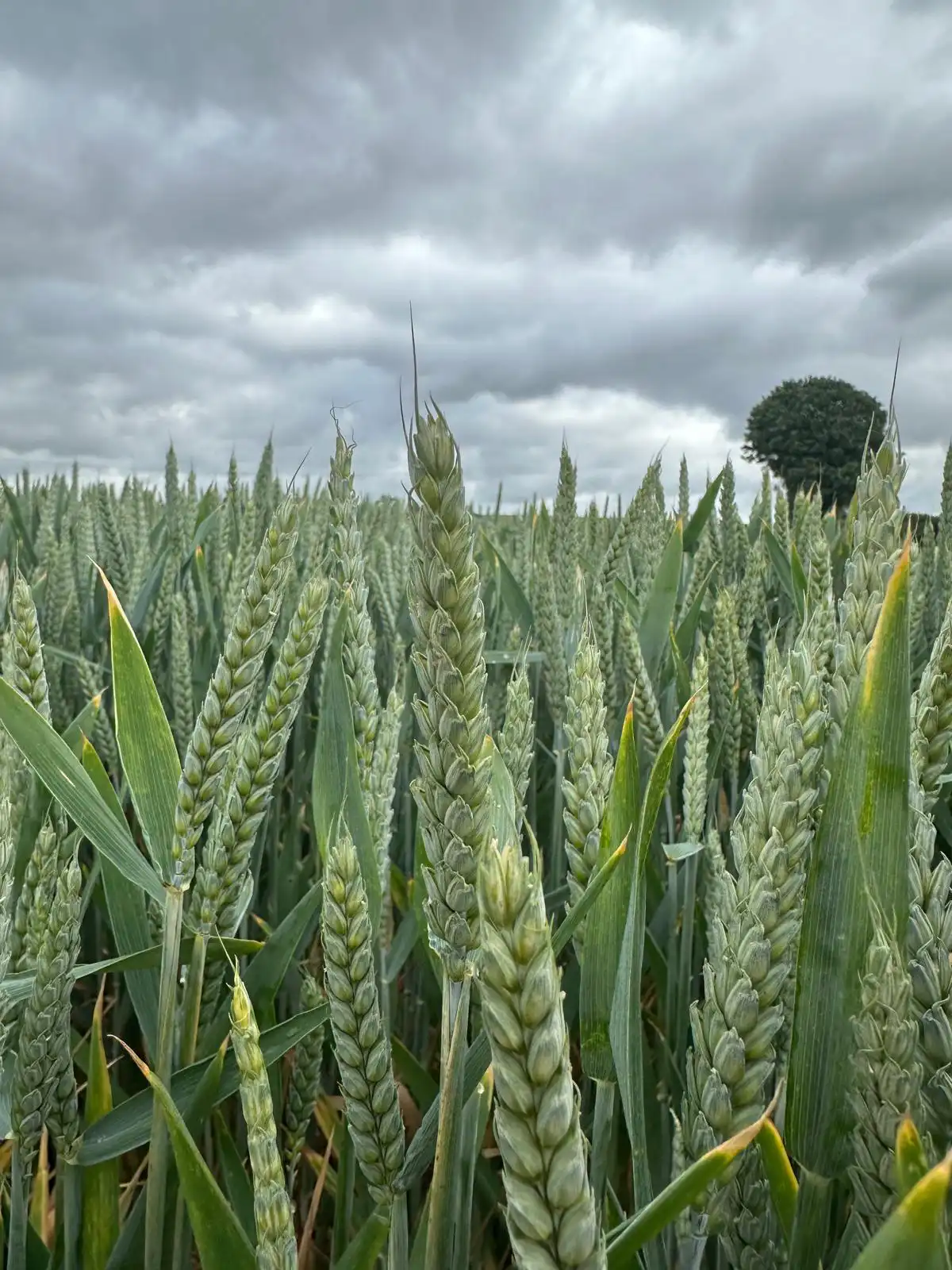
Walking fields before committing to a final nitrogen pass gives a clear picture of where investment is justified. Canopy thickness, flag leaf condition, ear counts, and overall crop uniformity all reflect how well earlier nitrogen has performed and how much capacity the crop has to respond further.
Thin, pale, or uneven crops are unlikely to deliver the same protein response as strong, well-developed stands. Yield maps and field history add useful context. On fields that consistently carry higher potential, a targeted final pass for protein is more likely to pay. On weaker blocks, holding back is often the more practical call.
Sulphur and its role in protein formation
Nitrogen alone cannot deliver reliable grain protein if sulphur is short. Sulphur is directly involved in protein formation, so a sulphur deficit can cap protein levels even when nitrogen rates look correct. This is particularly relevant for milling wheat, where hitting a protein specification is part of the commercial case.
Crops that have received balanced nitrogen and sulphur nutrition through the season tend to show more consistent protein response to final nitrogen applications. UAN plus Sulphur grades support this balance by delivering both nutrients together in each pass. Where sulphur has been covered earlier in the programme, the crop is better placed to use final nitrogen for protein rather than other metabolic processes.
Linking final nitrogen to contracts and market reality
Final nitrogen for protein is a commercial decision as much as an agronomic one. When milling premiums are strong, there is a clearer case for investing in a targeted late pass on the best fields. When premiums are narrow or contracts are uncertain, concentrating that investment on the highest potential crops makes more sense.
Growers are weighing up contract requirements, current crop condition, and the cost of additional nitrogen against realistic protein outcomes. Liquid fertiliser supports this by allowing rates to be varied field by field through the sprayer, so nitrogen goes where the return is most likely rather than being applied uniformly across the whole programme.
Protein decisions in the context of a dry season
Dry conditions have affected nitrogen uptake across many arable crops this season. Where soils have been dry through key growth stages, nitrogen applied earlier may not have moved into the root zone as efficiently as expected. That creates uncertainty around how much of the planned programme has actually been used by the crop.
Final protein applications in this context need to be assessed carefully. Where crops have clearly been limited by moisture stress and are carrying less biomass than expected, additional nitrogen for protein may not deliver the anticipated response. Where crops have held up well despite dry conditions and are showing good potential, a final pass is still worth considering on the fields that justify it.
Getting value from the full nitrogen programme
Grain protein outcomes reflect the whole nitrogen programme, not just the final pass. Nitrogen applied from the first split through to late applications all contributes to the crop’s nitrogen status at grain fill. Where earlier applications have been well timed and efficiently taken up, the final pass has less work to do.
Liquid fertiliser and UAN plus Sulphur grades support this efficiency throughout the programme. Consistent delivery, balanced nutrition, and the practicality of applying through existing sprayer kit all help more of the nitrogen applied reach the crop. Final protein applications, made where the crop can still respond, are the last piece of a programme that has been building towards that outcome all season.
Looking to improve your grain protein results? Get in contact with us today to get started.