Building a Lower-Emission Fertiliser System for UK Farming
At Nitrasol, improving nutrient use efficiency (NuE) sits at the centre of everything we do. We have set ourselves the ambitious target of improving the efficiency of our nitrogen fertiliser systems by 1% every year for the next 20 years, with the goal of achieving a market-leading 75% nutrient use efficiency against a UK average of 55%.
Better nutrient use efficiency means more of the fertiliser you purchase is converted into productive crop growth rather than being lost to the environment. That delivers three important outcomes for UK growers:
- Lower emissions of carbon, nitrogen, ammonia, and NOx
- Better financial performance through improved fertiliser efficiency
- Less nutrients wasted and harming groundwater and aquifers
As pressure grows on UK agriculture to reduce emissions, improve sustainability reporting, and maintain productivity, nutrient efficiency is becoming one of the defining measures of modern fertiliser performance.
Nitrasol’s approach goes beyond simply supplying nitrogen. We are developing an integrated fertiliser system designed to improve efficiency across manufacturing, logistics, storage, and field performance.
This is not driven by a single product or technology. It is a whole-company approach that combines:
- Long-term strategic supply agreements of lower-emission raw materials from some of the world’s most efficient factories
- Lower shipping and logistics emissions from the use of large-scale quayside storage without double handling
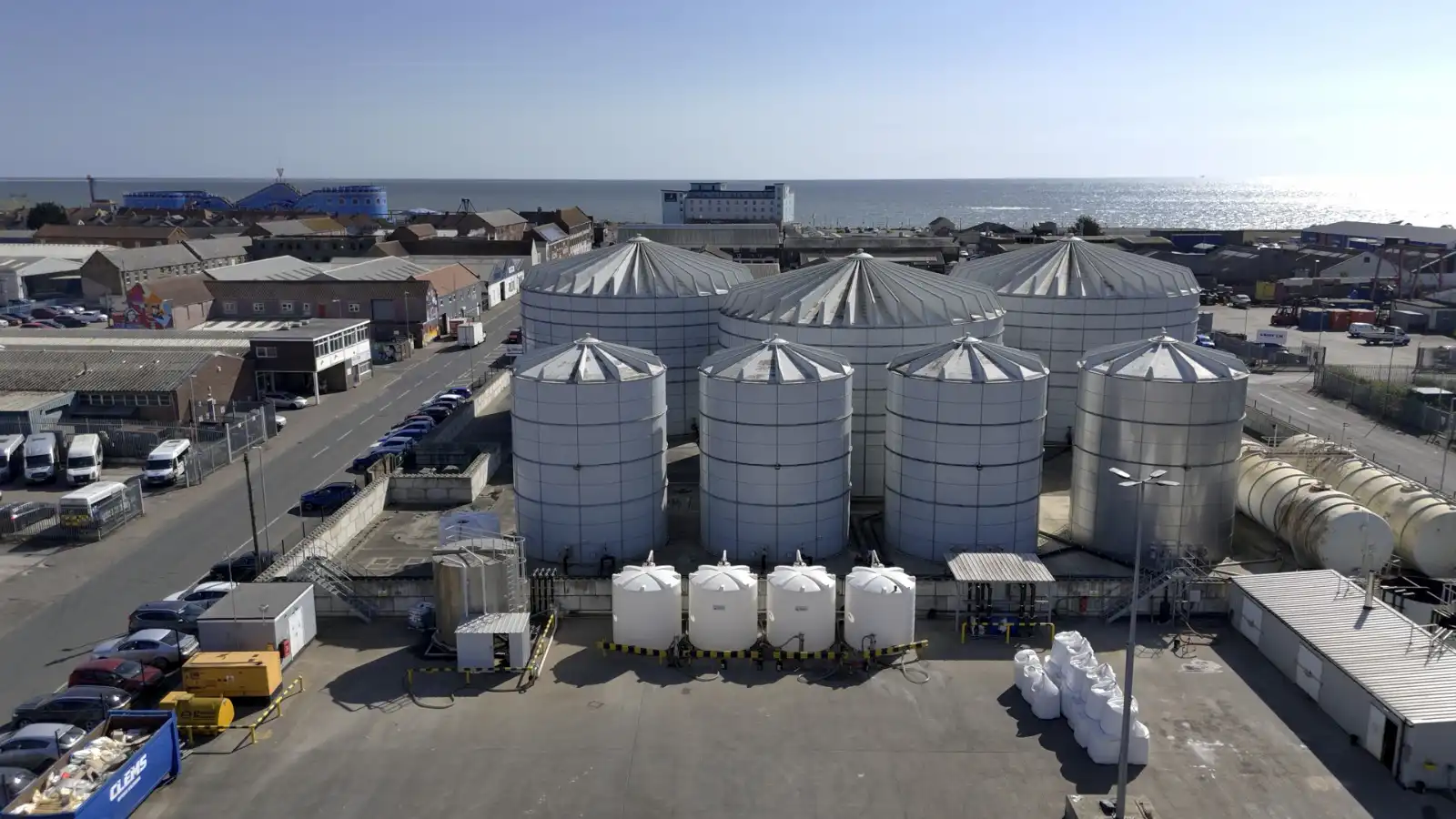
- Advanced engineered terminal built to the most compliant standards, featuring complete bunding, atmospheric control, and gravity feeding
- Advanced inhibitor and biological technologies
- Highly concentrated solutions with advanced sulphur chemistry to improve productivity in the distribution chain and on-farm logistics
Every stage of the supply chain contributes to lowering emissions and improving the value growers receive from every tonne of fertiliser purchased.
Lower-Emission Manufacturing Starts with the Raw Materials
The emissions profile of fertiliser begins long before it reaches the farm.
Nitrasol’s raw materials deliver industry-leading environmental performance, with emissions approximately 29% lower than the EU CBAM benchmark.
That advantage starts at production level.
Unlike many conventional fertiliser manufacturing systems, Nitrasol’s production processes are designed to capture and utilise carbon dioxide rather than releasing it into the atmosphere. As a result, no process CO₂ is emitted directly during production.
This creates a production system with emissions performance that exceeds many so-called “blue” alternatives, without introducing a significant price premium for growers.
Reducing Emissions Through Smarter Logistics
Logistics are often overlooked in discussions around fertiliser emissions, yet transport, storage, packaging, and handling all contribute significantly to the carbon footprint of nitrogen supply.
Nitrasol’s liquid fertiliser system has been designed to minimise these emissions throughout the distribution chain.
Efficient Sea Freight
- Larger vessels improve freight efficiency
- Energy consumption per tonne can be reduced by up to two-thirds
- Sourcing closer to the UK helps reduce transport distances further
Streamlined Terminal Operations
Nitrasol’s terminal infrastructure is designed to minimise energy use during storage and handling.
Bulk liquid systems eliminate energy-intensive stages associated with bagged fertiliser, including:
- Palletising
- Packaging and repackaging
- Intermediate warehousing
- Disposal of single-use plastics
Optimised Road Transport
- Lorries are dispatched fully loaded wherever possible
- Reduced emissions per tonne delivered
- Liquid-in-liquid production removes the need for additional process heat
Around 20% Lower Emissions Per kg of Nitrogen
Taken together, Nitrasol’s manufacturing, logistics, and formulation systems deliver around a fifth fewer combined carbon and ammonia emissions per kg N compared with commonly used UK nitrogen fertilisers.
This reduction comes from:
- Lower-emission raw materials
- Carbon capture within manufacturing
- Reduced logistics complexity
- Elimination of packaging waste
- More efficient transport systems
- Improved nitrogen retention on farm
The result is a fertiliser system designed to reduce emissions across the full supply chain, not simply at the point of application.
ATS Sulphur Nutrition and Reduced Ammonia Losses
Nitrasol’s nitrogen plus sulphur grades use ammonium thiosulphate (ATS) as the sulphur source.
ATS supports sulphur-demanding crops including:
- Oilseed rape
- Wheat
- Barley
Alongside its nutritional benefits, ATS can also help naturally reduce ammonia losses compared with untreated urea-based fertilisers.
For growers requiring full Option 4 compliant protection after 1 April, Nitrasol’s AdvaNShield system provides the approved inhibited route.
AdvaNShield: Keeping Crops Greener for Longer
Nitrasol continues to invest in technologies that improve nitrogen efficiency directly in the field, including the AdvaNShield range featuring the patented NutriSphere-NL system.
The practical benefits include:
- More than 50% reduction in nitrogen loss compared with untreated nitrogen
- Improved nitrogen availability throughout the growing season
- Yield increases of up to 4% in replicated field trials in some seasons
- Option 4 compliant protection after 1 April
By improving nitrogen retention and extending crop availability, AdvaNShield helps crops remain greener for longer while improving overall nutrient efficiency.
Sustainability for Today and Tomorrow
Improving sustainability in farming requires more than isolated product changes. It requires long-term improvements across the entire fertiliser system.
At Nitrasol, we are combining lower-emission production, smarter logistics, improved formulations, and advanced nitrogen protection technologies to help UK farms improve nutrient use efficiency year after year.
For growers facing increasing environmental scrutiny and tighter nitrogen regulation, a long-term partnership with Nitrasol provides a practical route to:
- Lower fertiliser emissions
- Better nutrient efficiency
- Reduced logistics complexity
- Improved crop performance
- Greater compliance confidence
By helping farmers tread less heavily on our shared environment while maintaining productive and profitable cropping systems, Nitrasol is building a more sustainable fertiliser model for the future of UK agriculture.
Looking to switch to liquid fertiliser? Get in contact with us today to get started.