

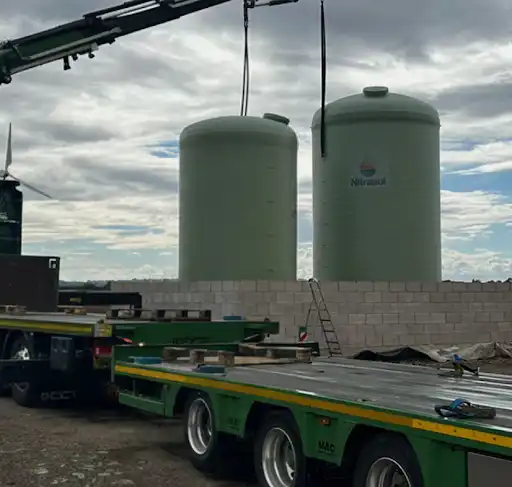
Switching from solid to liquid fertiliser is mainly about planning tanks, checking how it fits your sprayer system, and understanding how the change affects cost control and efficiency on your farm.
Tank installation timelines
Most farms can go from decision to a working liquid fertiliser tank system within a few months, provided site preparation and bunding are planned early. Ordering tanks well ahead of spring and filling them over winter spreads workload and avoids the delivery bottlenecks that appear when everyone wants product at the same time. But if it’s a last minute decision then allowing 6 weeks, from signing a tank deal to getting the tanks on farm, can also be an achievable timescale.
Good siting, access for tankers, and integration with existing sprayer filling areas are worth thinking through up front, as they make day-to-day operation smoother and safer. Nitrasol offers support on tank choice, layout and compliance to keep installation straightforward.
Sprayer compatibility and setup
Liquid fertiliser is applied through standard crop sprayers, so in most cases no new application machinery is needed, only appropriate nozzles and calibration. Clear, filtered Nitrasol liquids are designed to work with modern GPS, section control and rate controllers, supporting precise application without hardware changes.
Where farms run older sprayers, small upgrades to spraylines and nozzles may be required to handle higher flow rates and protect against wear. A short commissioning phase, including water-only tests, helps operators gain confidence before first fertiliser use.
Handling, safety and day-to-day use
Liquid systems remove all bag handling, pallet storage and working at height, replacing them with ground-level hose connections from tank to sprayer. Properly bunded tanks, sealed valves and quick-connect couplings reduce spillage risk and keep fertiliser transfer contained within a defined area.
Operators still need clear procedures and PPE, but the focus shifts from lifting and cutting bags to controlled pumping and hose management. Integrating rainwater and wash-down capture around the sprayer and tanks keeps any residues on site and compliant.
Cost control and buying strategy
Switching to liquid still allows for different ways to manage fertiliser spend, including forward-buying and filling tanks when prices and logistics are favourable. When product for first applications is stored on farm, nutrient timing is less exposed to haulage constraints, which reduces the risk of missing key growth stages. Tank top ups can be delivered within 48 hours.
High-analysis Nitrasol liquids deliver more nitrogen per litre, cutting transport and application passes, which feed directly into cost per hectare and fuel savings. With fewer handling steps and no plastic packaging, overall logistics are simpler.
Efficiency and agronomic benefits
Liquid fertiliser supports precise placement, variable rates and clean headlands, preventing nutrients from hitting hedges, tracks or watercourses. This improves nutrient use efficiency and helps farms align with tighter regulations on nitrogen losses and emissions.
Technologies like AdvaNShield stabilise nitrogen within the soil profile, reducing volatilisation and leaching so more of each litre actually feeds the crop. Combined with faster field coverage and reliable tank-mix compatibility, these efficiency gains are a key reason many growers now see liquid as a strategic upgrade rather than a niche option.
Are you considering the move to liquid fertiliser? Get in contact with us today to get started.