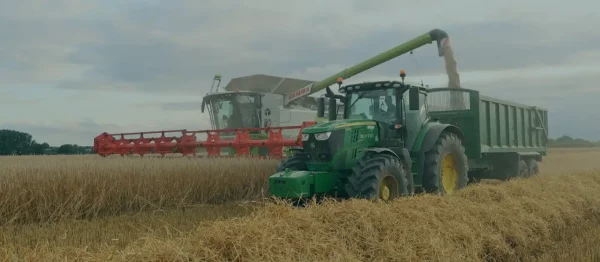
Harvest is more than an ending. It is one of the most valuable sources of information a grower gets all year, and much of it can go unused once the combine is parked up and the focus shifts to drilling.
Yield maps, grain quality reports and even the gaps in a field tell a story about what happened between drilling and cutting. Before that story fades from memory, it is worth asking a few honest questions. Which areas underperformed, and why? Where did the crop appear to run short of available nitrogen before it had finished building yield? Were there patches that never quite matched the rest of the field, regardless of visible soil type or drainage? Did protein come in where it should have, or was there a gap between the nutrition programme and the result at the weighbridge?
These questions matter because next season’s nutrition plan starts now, not in February. The window between harvest and drilling gives growers an opportunity to think it through properly, rather than reacting to whatever the weather or the calendar forces on them a few months later.
Reading Between the Lines
A below-target grain protein result, for example, can have several causes. Nitrogen rate and timing, yield dilution, variety, rooting, drought and disease can all affect the final figure. Where the nitrogen programme appeared adequate, sulphur availability is another factor worth reviewing because sulphur deficiency can limit nitrogen utilisation and affect grain quality.
Sulphur has become an increasingly important variable in UK crop nutrition. Atmospheric sulphur deposition has fallen markedly over recent decades, increasing the risk of deficiency. That risk is not the same on every farm: soil texture, drainage and winter rainfall all influence how much sulphur is likely to remain available to the crop. Sandy soils and land exposed to higher winter rainfall are generally at greater risk. If this year’s crop looked well fed on paper but underdelivered in the field, sulphur balance is therefore worth reviewing alongside the other possible causes before assuming the answer is simply more nitrogen next time.
Rotation performance deserves the same scrutiny. A crop that struggled this year might need a different approach next time, rather than more of the same input at a higher rate. It is also worth looking at consistency across the farm instead of relying only on the average. Two fields with the same headline yield can tell very different stories once the numbers are broken down by block. Those differences may trace back to nutrition, establishment, soil condition, drainage, pest or disease pressure, or a combination of factors.
Weather always plays a part, and no review should pretend otherwise. It explains much of the variation between seasons and can also interact with differences in soil depth, drainage, topography and water-holding capacity within a field. However, when one area consistently trails the rest year after year, rainfall alone is unlikely to provide the full explanation. It is a pattern worth investigating through yield maps, soil and tissue analysis, application records and field history rather than writing it off as bad luck.
Turning Reflection Into a Plan
This is where the season’s insight starts converting into next season’s decisions: what nitrogen and sulphur programme fits the coming rotation, how much liquid fertiliser needs to be on farm and when, and what needs to change in tank capacity or supply arrangements to avoid a repeat of any pinch points from this year.
It is also worth being specific rather than general. A vague sense that “nitrogen worked reasonably well” is not much of a starting point. A specific note that a particular block underperformed on protein despite receiving the planned nitrogen programme, and that sulphur was not included, is something that can be investigated and acted on when it comes to choosing next year’s grade. It does not diagnose the cause on its own, but it gives the grower and agronomist a useful place to start.
None of this requires rushing a decision. It requires starting the conversation early enough that there is time to make a considered one, rather than defaulting to last year’s plan simply because there was not time to evaluate the alternatives properly.
Over the coming weeks, this series will work through exactly that: storage, supply, establishment, and the specific question of nitrogen and sulphur grade choice for the season ahead. The best nutrition strategies are not built in a hurry. They are built by growers who take the time, right after harvest, to look at what the data is telling them rather than moving straight past it towards the next job on the list.